
The colossal success of the iPhone and its big brother, the iPad, are due in large part to their superior technical functionality. But equal credit must go to the high-concept design of Apple products—and even to Apple packaging—driven by Steve Jobs and his chief designer Jony Ive. While Ive left Apple after 27 years to start his own company LoveFrom (take a moment and check out the comma on the homepage of their website), I was privileged to be in the audience for one of his last presentations in which he described his attention to detail on the look and feel of every product that bears the Apple logo. Ive provided even further insight about his approach in a Wall Street Journal interview about LoveFrom, explaining that one of his first hires was a full-time writer: “to help conjure into words the ideas that his team of graphic designers, architects, sound engineers and industrial designers come up with for its collaborations.”
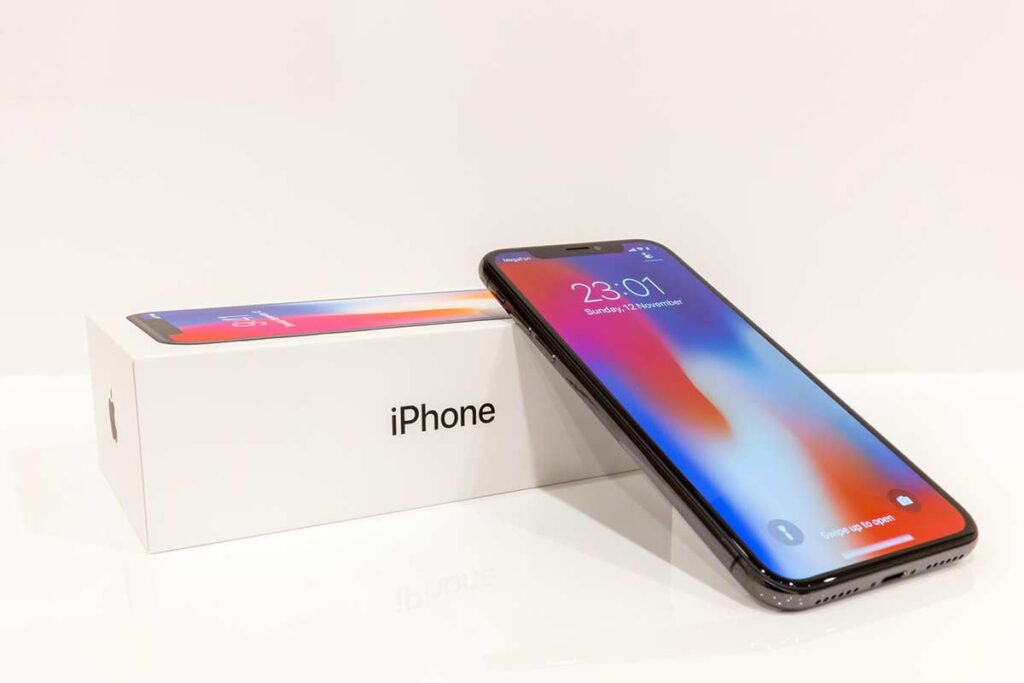
Image: Yay Images
I discussed Apple’s excellence with veteran Silicon Valley CEO and Board member Bill Portelli, who observed that there are three basic qualities of their design that could be applied to crafting a story:
- Simple
- Intuitive
- Assumes the intelligence of its end user
Anyone who owns an iPhone—or who has looked over a shoulder at someone else’s iPhone—will agree that Portelli’s observation is spot on. And his observation that a well-told story should have the same basic qualities is spot on, too:
- Simple. Most presenters make the fatal mistake of overwhelming their audiences with too much information, or TMI. In the parlance of the highest of high technology, you have to make your story easy enough for your mother to understand. Follow the Less is More approach of Apple’s designs in telling your story. Make your narrative succinct.
- Intuitive. Your story is brand new to your audience, so they need context to process what you are saying. Provide them with a clear flow, and keep them in the flow by using linkages as you move through the individual parts of your story. Make it easy for them to follow, and they will follow your lead. Make it hard for them, and they will make it hard for you.
- Assume Intelligence. Give your audience more than the usual boilerplate features, benefits, and facts. Your audience has been there, done that, and they get it. They need and can process more than you show on your slides. Add value and dimension in your narrative with examples, analogies, anecdotes, evidence, current data, and customized content.
Apple often touts the multi-touch screen as one of the main features on many of their products, which provides another analogous piece of advice to presenters: Connect with your audience at multiple touch points—through their eyes, their ears, and their brains.
When you tell your story, be a Mac.
This blog is an excerpt from Jerry’s book Presentations In Action published by Pearson. Also check out his newly released Presentation Trilogy—Presenting to Win, The Power Presenter, and In the Line of Fire—available on Amazon and other retailers.

Jerry Weissman is the founder and president of Suasive, Inc., formerly Power Presentations, Ltd. Jerry founded Suasive in 1988 and quickly established himself as the coach for Silicon Valley CEOs delivering critical presentations for their IPO roadshows. He taught them to tell their company stories through the eyes of their investors, and in so doing, significantly increased the valuations of their companies. He amassed an elite client list and soon widened his focus to helping public and privately held companies develop and deliver all types of business presentations.
The views and opinions expressed in this blog post or content are those of the authors or the interviewees and do not necessarily reflect the official policy or position of any other agency, organization, employer, or company.
Related Posts
 By Jerry Weissman As challenging as it is to design slides as illustrations for presentations and, more recently, for virtual presentations, the desig...
 By Jerry WeissmanThe step-by-step process to get past the proverbial blank page of the previous blog is as applicable to presenters as it is to writer...
 By Jerry WeissmanWriter’s block is the proverbial stuff of legend and literature. A variation on the theme is Limitless, a Hollywood film starring Bra...
 By Jerry WeissmanWe’ve all been in the audiences of far too many presentations that unleash all the bells and the whistles of slideshow animation with...