
This is the print version of this page. All content is copyright Indezine.com 2000-2026.
Thoughts and impressions of happenings in the world of PowerPoint and presentations, continuously updated since 2003.
See Also:
PowerPoint and Presenting Notes
PowerPoint and Presenting Glossary
Docs.com is a file sharing site from Microsoft that lets you share many of your Microsoft Office files with other people. While there are many sites that allow you to share files, what sets Docs.com apart is that the file formats of your files are unchanged. This is a huge advantage since Docs.com treats most Microsoft Office files such as PPTX (PowerPoint), DOCX (Word), and XLSX (Excel) as native.

Learn how to get started with Docs.com.
Filed Under:
PowerPoint for the Web
Tagged as: PowerPoint for the Web, Tutorials
Comments Off on Getting Started with Docs.com
Every shape in PowerPoint is a combination of segments (lines) and points (vertexes) — and these segments and vertexes are only visible within Edit Points mode. We won’t discuss segments for now, but let us help you explore different types of vertexes (points) in PowerPoint 2003. Essentially, these are of four types.
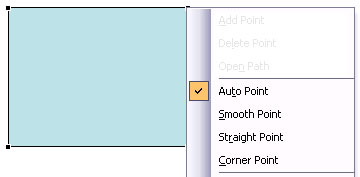
Learn about different types of points (vertexes) in PowerPoint 2003 for Windows.
Filed Under:
PowerPoint 2003
Tagged as: PowerPoint 2003, Shapes, Tutorials
Comments Off on Learn PowerPoint 2003 for Windows: Types of Points (Vertexes)
Assuming someone has provided you with an HSL (Hue, Saturation, and Luminosity) value of a color, and asked you to add a rectangle of that color to a slide in PowerPoint 2010, then how do you proceed? Let’s also explore another scenario. What if you have started with a color that’s close enough to what you need, but it’s not the exact one. Maybe you need it to be a little less saturated? Again, you will benefit by working with the HSL color model rather than the RGB model.

Learn about how to work with HSL colors in PowerPoint 2010 for Windows.
Filed Under:
PowerPoint 2010
Tagged as: Color, PowerPoint 2010, Tutorials
Comments Off on Learn PowerPoint 2010 for Windows: Working with HSL Colors
Creating graphics is not a cakewalk, but that need not dissuade aspiring designers — especially since many programs now include more intuitive and easy to use abilities that can allow anyone to create awesome quality graphics. Xara Designer Pro X11, the newest version of a well-known graphic program includes all the illustration, photo editing, DTP and web design features you may need.

Explore Xara’s Designer Pro X11, a program that has amazing graphics abilities.
Comments Off on Xara Designer Pro X11: Indezine Review
Assuming someone has provided you with an HSL (Hue, Saturation, and Luminosity) value of a color, and asked you to add a rectangle of that color to a slide in PowerPoint 2013, then how do you proceed? Let’s also explore another scenario. What if you have started with a color that’s close enough to what you need, but it’s not the exact one. Maybe you need it to be a little less saturated? Again, you will benefit by working with the HSL color model rather than the RGB model.

Learn about how to work with HSL colors in PowerPoint 2013 for Windows.
Filed Under:
PowerPoint 2013
Tagged as: Color, PowerPoint 2013, Tutorials
Comments Off on Learn PowerPoint 2013 for Windows: Working with HSL Colors
Microsoft and the Office logo are trademarks or registered trademarks of Microsoft Corporation in the United States and/or other countries.