

Richard Goring is a Director at BrightCarbon, a presentation and eLearning agency. He enjoys helping people create engaging content and communicate effectively using visuals, diagrams, and animated sequences that explain and reinforce the key points, which is supported by plenty of resources and tips at the BrightCarbon site.
In this conversation, Richard talks about his participation at the upcoming Presentation Summit 2023, being held on location in Monterey, CA this year from October 15 to 18, 2023, and virtually from November 5 to 8, 2023.
Indezine.com is the official media partner for the Presentation Summit.
Geetesh: Richard, can you tell us more about your Persuasive Visual Storytelling session at the upcoming Presentation Summit conference. What will be the main takeaway for the audience?
Richard: Well hopefully it will be how to create persuasive visual storytelling for presentations. But more usefully and more specifically the techniques that you can incorporate into your presentations to ensure that they are effective, that you engage with your audience, and that your message is conveyed in a compelling way. I think you could probably consider three major components to it:
1. Audience and objective
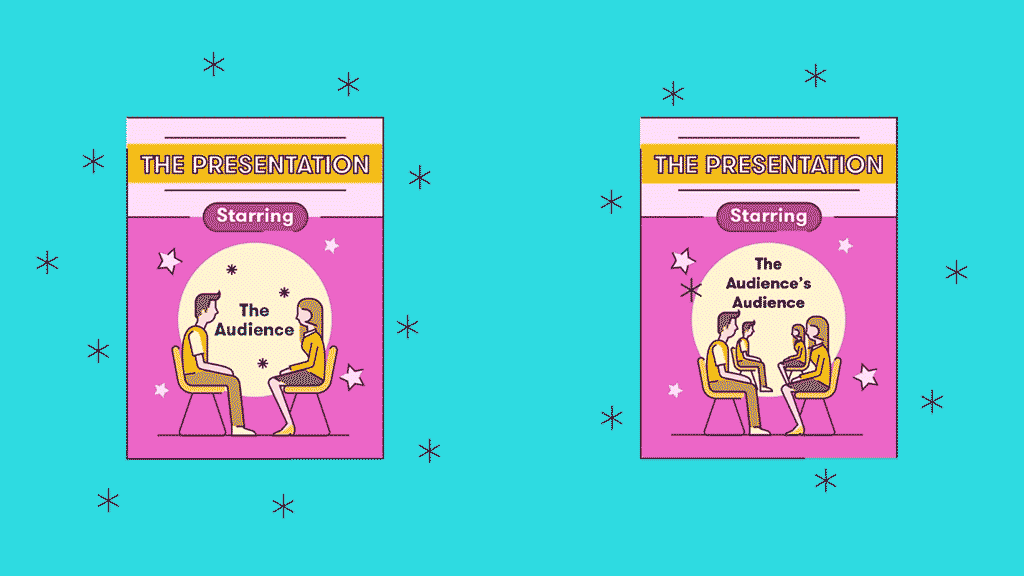
First, everything should really start with your objective for this audience. Who are they, what do they need, and what do you want them to do as a result of this presentation? Setting that up gives you a really clear guide for what your story should be and the content needed to support it. Every audience is likely going to be at least somewhat different, so even if you’re using the same slide deck each time – which isn’t really ideal – you can still customize your presentation by altering your narrative to suit each audience in front of you. It’s sometimes also worth thinking about the people not in the room, who will have to hear your message later on. What can you do to help your immediate audience pass on that message convincingly.
2. Story flow
Next, think about your story flow and how the overall presentation will be structured, along with each individual sequence, the guide your audience through the journey. Building up your story in a way that recognizes the needs of your audience allows them to connect to your content in a much more meaningful way, because you’re establishing how it’s directly relevant to them, which makes the whole thing far more compelling and much more likely that they will engage with you. You also need to think about the structure of each individual slide or slide sequence and typically a three-beat story works well to give good pacing and allow people to follow along. That could be feature, advantage, benefit; problem, solution, benefit; situation, action, outcome; or any number of other sequences, but the point is that it helps the audience and forces you to ensure that all of your content is contributing usefully to the story.

3. Meaningful visuals
And then once you have a compelling story, you should use visuals that connect in a seamless and elegant way to tell that story. Remember that a presentation isn’t the same thing as a document, as you have a presenter there to explain, add detail, and provide nuance. Don’t just come up with an icon for each of the points you want to make and accompany it with a small amount of text because that means there’s no real flow. Is there a visual you can use that touches on all components of your story? Is there an image that you can manipulate in different ways? What about a diagram that shows all the individual components together? Or a data set that you can annotate and add a trend line to with perhaps a key message take away highlighted within the chart? That helps to make it really clear what it’s about and why people should care, ultimately ensuring that it’s successful.

Geetesh: Richard, how can designers avoid creating slides that look great but do not tell a story? Can you share some thoughts.
Richard: Think about the audience and what they need to know. How does the slide you’ve created tell people the story. Can you clearly and easily answer ‘so what?’ from the audience’s perspective? The ‘so what?’ game is a good one to play for every slide (or slide sequence) you create, as it forces you think about what the audience really cares about, what will resonate with them, and what is likely to make them change their behavior. It allows you to cut out the things that aren’t as important or might get in the way of people understanding that key idea.
There’s also a risk with heavily designed slides that you focus on things that are only decorative – just there to look good. Icons can be a classic example of this. In so many instances they mean nothing and become cumbersome garnish. But many think that they’re doing a lot of the storytelling heavy lifting which often isn’t true. If you carefully consider what the design is actually bringing to the party – how it’s helping the audience to understand the point being made – then you’ll be on the right track.
Geetesh: Tell us more about your design agency, BrightCarbon. What is it that sets you apart from other slide design houses?
Richard: Ha! Well, it’s clearly that we’re all so charming, beautiful, witty, and modest people. ????
If I could alter the question slightly, I might ask what sets apart a presentation specialist vs a generic design agency, because that’s quite a big difference. With a specialist, you’re working with someone who understands a chunk of the stuff I’ve just mentioned. How to connect a story with the audience, with a presenter (who often isn’t a professional presenter) delivering the message. That’s not really the sweet spot for graphic design firms who tend to focus on the purity of the design, rather than the messy realities of presentations. If you’re working with anyone who specializes in presentations, then you’re probably going to be OK.
And as an industry, all the presentation agencies I know are all good, working towards a common goal of helping people improve the effectiveness of their communication. Some do great podcasts or resources. We do fabulous, free webinar masterclasses most Thursdays. A rising tide lifts all boats, and we all try to contribute to it.
I suppose that BrightCarbon is probably focused more towards the complex storytelling side of presentations, rather than the rapid turnaround design touchup that some others do. Both equally valid approaches, but addressing different needs. A lot of our work requires in-depth thinking of the audience, content, story, and delivery – half of our team are storytelling consultants, and the other half are graphic designers – so we work closely with our clients to really understand the content, and help tell their story in an elegant and effective way.
What is the Presentation Summit?

For over two decades, Rick Altman has been hosting the Presentation Summit, a highly popular event that is geared towards users of PowerPoint and other presentation platforms.
Indezine.com is the official media partner for the Presentation Summit.
In-person: October 15 to 18, 2022 at Monterey, CA
Virtual: November 5 to 8
The views and opinions expressed in this blog post or content are those of the authors or the interviewees and do not necessarily reflect the official policy or position of any other agency, organization, employer, or company.
Related Posts
 Richard Goring is a Director at BrightCarbon, a presentation and eLearning agency. He enjoys helping people create engaging co...
 Richard Goring is a Director at BrightCarbon, the specialist presentation and eLearning agency. He has helped to write and create thousand...
 Richard Goring is a Director at BrightCarbon, the specialist presentation and eLearning agency. He has helped to write and create thousand...
 Julie Terberg is a designer, author, speaker, and LinkedIn Learning instructor. She is the founder of Terberg Design, a creative studio fo...