
Mortimer Adler, the noted 20th Century professor, philosopher, and chairman of the Board of Editors at Encyclopedia Britannica, was also a scholar of the classics. In his 1983 book, How to Speak How to Listen, Mr. Adler described an invitation he received to speak at the Advertising Clubs of California:
They asked me in advance for a title. I suggested that it be “Aristotle on Salesmanship,” a title I thought would be sufficiently shocking for them. It was. No one had ever before connected the name of Aristotle with salesmanship—or with advertising, which is the adjunct of selling.
Sadly, no one connects presentations with selling either. Why else do audiences so often mutter to themselves, “What’s the point of all this?” or “…and your point is?” Such questions are prompted by a pointless story, but more often, by a lack of a call to action.
The answer to those questions may be that, because salesmanship is held in such low esteem in our culture, asking for the order is considered pushy. In a book called The Art of the Sale, author Philip Delves Broughton points to two Pulitzer Prize-winning plays, Arthur Miller’s “Death of a Salesman” in 1949 and David Mamet’s “Glengarry Glen Ross” in 1984, as having marked salesmen as archetypically unsavory characters. Mr. Delves Broughton goes on to describe current salesmen as people who are “goaded to perform and reined in when they sell too hard. They are patronized as ‘feet on the street’ by those who prefer to imagine that business can be conducted by consultants with dueling PowerPoint presentations.”
The solution is to go beyond PowerPoint and make your point crystal clear, make an unmistakable call to action. That is the mark of effective salespersons, effective presenters, and effective people in all walks of life. As L. Gordon Crovitz, a former publisher of The Wall Street Journal, wrote in his review of Mr. Delves Broughton’s book:
We all engage in sales of one sort or another. Parents sell the idea of eating vegetables to their children; reporters sell their latest story idea to editors; university presidents sell their institution’s neediness to potential donors.
But asking for the order is only part of the solution to effective salesmanship; the other is to provide benefits to customers in sales, and benefits to audiences in presentations. Failure to give benefits in each arena is anathema.
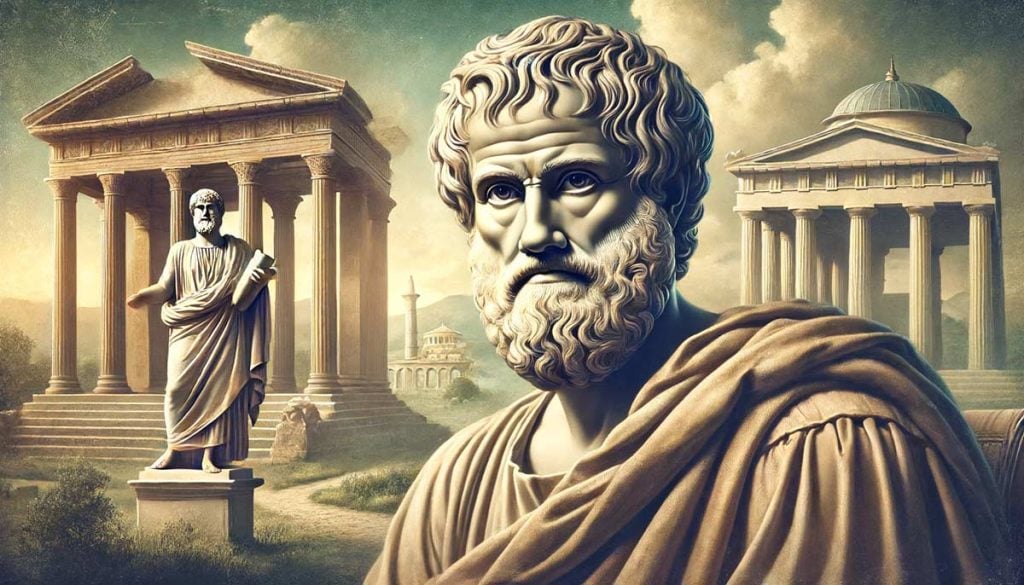
Which brings us right back to Aristotle. 2300 years ago, the great philosopher proposed that, to be persuasive, a speaker must provide the holy trinity of Ethos, or credibility, Logos, or evidence, and Pathos, or benefits. In the 21st Century, the first two are givens. Given the curiosity and speed of our media, no speaker or businessperson can get away with unethical behavior or shoddy evidence—for very long. Consider the current parade of exposed politicians and executives whose misdeeds make the sleazy salesmen in “Glengarry Glen Ross” look like kindergarten pranksters.
But pathos is still sadly missing. So if you take away only one lesson it is this: load every presentation you ever give with benefits for every audience. And do it with this simple rule of thumb: pause every couple of minutes in the forward progress of your story, and start this sentence, “The reason this is important to you is…” and then finish it with a benefit to that specific audience. Or pose this rhetorical question, “What’s in it for you?” and answer it with a benefit.
Only then can you make your call to action; only then can you make the sale.

Jerry Weissman is the founder and president of Suasive, Inc., formerly Power Presentations, Ltd. Jerry founded Suasive in 1988 and quickly established himself as the coach for Silicon Valley CEOs delivering critical presentations for their IPO roadshows. He taught them to tell their company stories through the eyes of their investors, and in so doing, significantly increased the valuations of their companies. He amassed an elite client list and soon widened his focus to helping public and privately held companies develop and deliver all types of business presentations.
The views and opinions expressed in this blog post or content are those of the authors or the interviewees and do not necessarily reflect the official policy or position of any other agency, organization, employer, or company.
Related Posts
 By Jerry WeissmanWe’ve all been in the audiences of far too many presentations that unleash all the bells and the whistles of slideshow animation with...
 By Jerry WeissmanSir Winston Churchill, the great British Prime Minister, prolific author, and distinguished orator who addressed some of the most aug...
 By Jerry Weissman The legendary Broadway composer and lyricist, Stephen Sondheim, died November 26, 2021, at the age of 91, but his legacy lives on. H...
 By Jerry WeissmanA Close Cousin of Writer’s BlockIn the prior blog, you read about how the hero of the Hollywood film, Limitless, cures his writer’s b...